
ブログ
The shape of “Pocky” is now trademarked in Japan
2026.02.20
SHARE


Ezaki Glico Co., Ltd. (“Glico”) applied to register the shape of its flagship brand, “Pocky,” a stick-type chocolate confectionery, as a 3D trademark. On July 25, 2025, trademark registration was granted during the examination stage by the Japan Patent Office (“the JPO”). This is one of the rare instances in which a product’s shape has been recognized as a trademark in Japan.
In the 59 years since its launch, Pocky has become one of Japan’s most beloved chocolate snacks, and it would not be an exaggeration to say that it is difficult to find anyone unfamiliar with its appearance. Even if they were shown the shape of Pocky without the Pocky lettering, the vast majority of Japanese people would instantly and without hesitation answer, “That’s Pocky.” This fact was demonstrated statistically by a consumer survey to assess the recognition of Pocky’s 3D shape that Glico conducted in 2023 before filing the application for the 3D registration. The survey targeted 1,036 Japanese individuals aged 16–79 years, of whom over 90% correctly identified the shape as Pocky based solely on its appearance.
Bolstered by these survey results, Glico filed an application for the following 3D trademark covering “confectionery; western-style confectionery” in Class 30 in Japan on March 13, 2024:
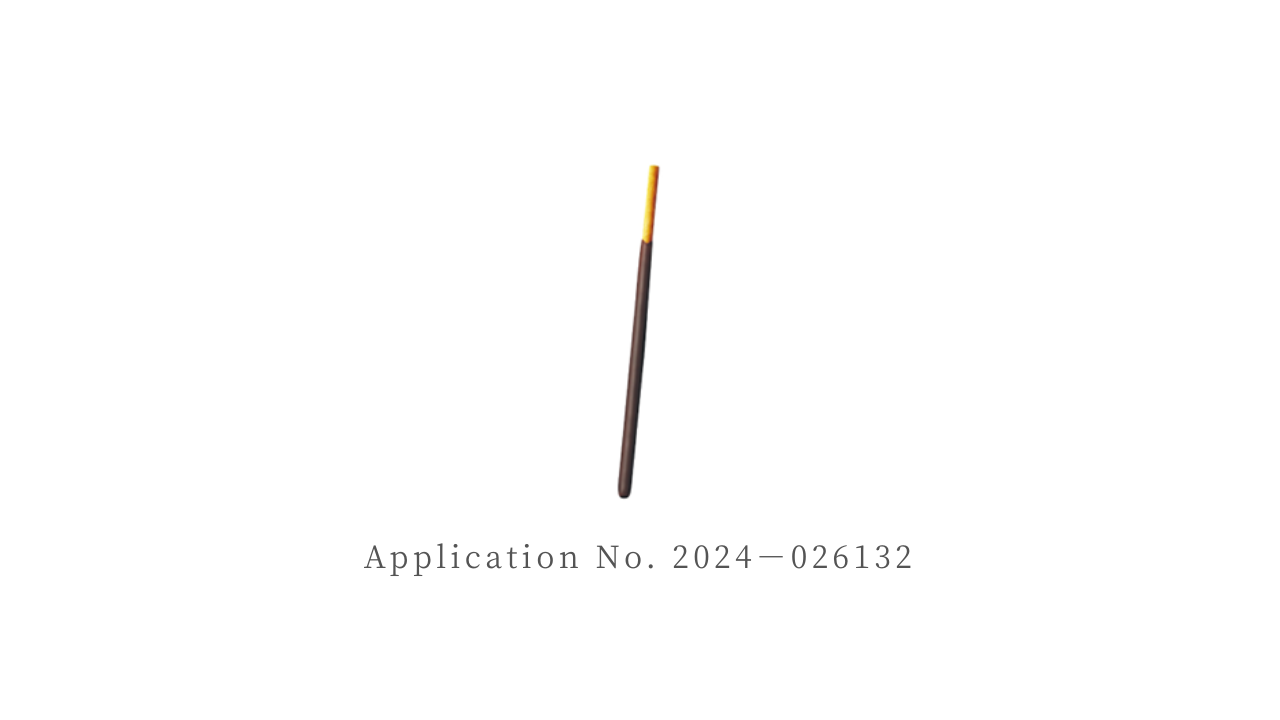
However, during the examination, the Examiner issued a provisional refusal due to a lack of distinctiveness, stating that the applied-for trademark falls under Article 3(1)iii of the Japan Trademark Act. The Examiner noted that chocolate confectionery products with a composition similar to the applied trademark are commonly traded in the Japanese market. Consequently, even if the applied-for mark is used on the designated goods, because consumers encountering it would merely recognize it as a representation of the goods’ content or characteristics, it thus lacks distinctiveness. Furthermore, the issue of whether a trademark for which registration has been applied has reached a point where consumers can recognize it as pertaining to the goods of a particular party as a result of its extensive use is determined by a comprehensive consideration of factors such as whether the trademark is nationally recognized among consumers of those goods as an indication of origin for that party. This determination is based on a broad body of evidence, including the manner and extent of use (production volume, sales volume, etc.), period of use, geographic area of use, methods, duration, geographic scope, and scale of advertising and promotion, as well as the results of surveys measuring consumer recognition of the trademark. It is emphasized that the submitted survey results alone were insufficient to establish that consumers nationwide of the good recognize the applied-for trademark as an indication of origin.
In response, Glico successfully proved the acquired distinctiveness by supplementing its application with the required documentation. In addition, Glico limited the description of goods to “chocolate confectionery.” As a result, the application was finally registered.
In the examination process, Glico mainly argues the following to prove the acquired distinctiveness of the Pocky 3D shape:
(i) More than half a century after its launch, Pocky remains a beloved global hit, selling approximately 500 million boxes annually across 30 countries. In 2020, Guinness World Records recognized Pocky as the world's No.-1-selling chocolate-coated biscuit brand.
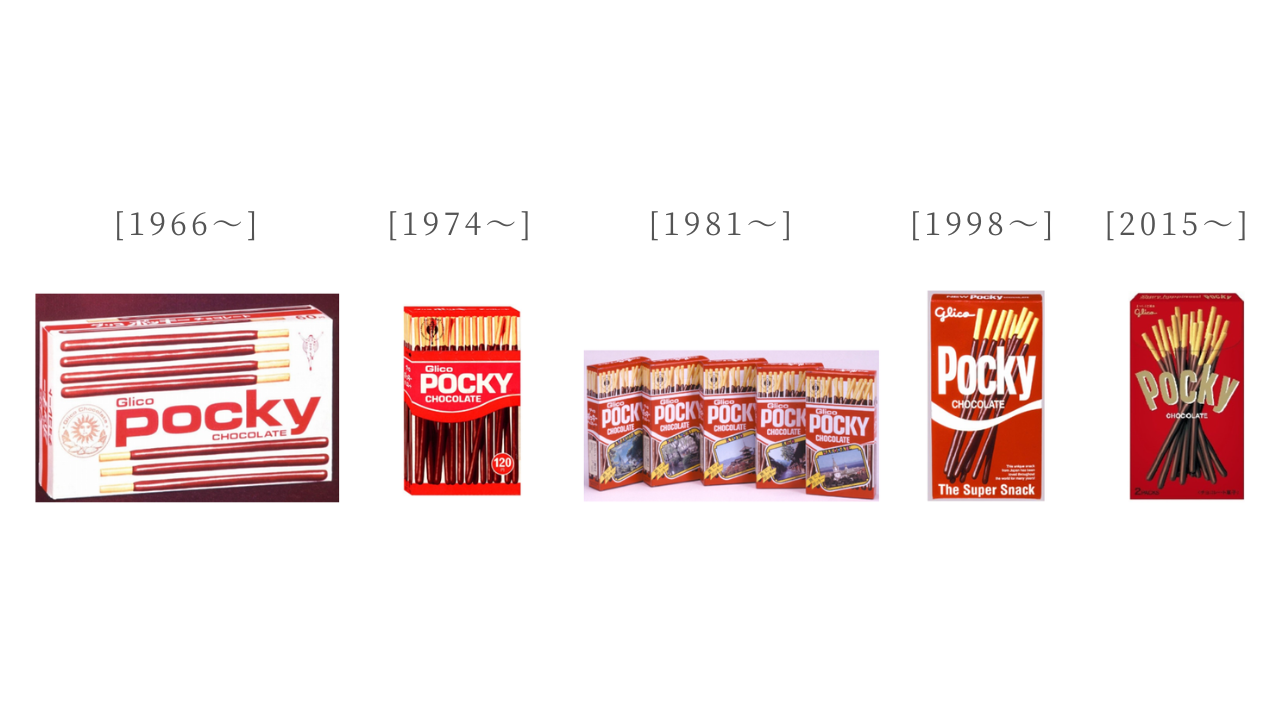
(ii) Since its initial release, the surface of the Pocky package (outer box) has prominently featured a depiction of the Pocky product shape. As shown below, the product shape of Pocky has remained unchanged since its launch in 1966:
(iii) As a result of the Consumer Survey, Glico states as follows:
- First, an image of the three-dimensional shape of Pocky (the applied-for trademark tilted diagonally to the right, with a faint linear shadow drawn from its lower edge to the right side to indicate its three-dimensionality) was displayed on the screen. In response to the question, “Please look at the following screen and freely write down what comes to mind,” the most common response was “Pocky,” accounting for 88.1% of all responses. The second most common response was “Pocky Chocolate” (3.5%), followed by “Confectionery” (1.3%) and “Pretz” (0.6%). In other words, in response to the pure recall question, 91.6% of consumers selected “Pocky” when shown the applied-for trademark alone, confirming its extremely high recognition.
- For the second question, the image used in the first question was displayed again on the screen. Respondents were asked: “Please look at the image below and select only one confectionery name that comes to mind from the following options.” Eleven options (the applicant’s product and popular chocolate confectionery products from other companies with shapes and colors similar to those of Pocky) were displayed. In this format, where respondents could select only one option, “Pocky” was the most frequently selected answer, accounting for 97.4% of all responses. Only 1.2% selected “None of the above.” In other words, even when presented with nine similar competing product names in response to the aided recall question, over 97 of every 100 respondents selected the applicant’s product “Pocky,” indicating extremely high recognition. Furthermore, to eliminate the influence of presentation order on responses, the 11 options were randomized for each respondent, ensuring that “Pocky” was not always displayed as the first option.
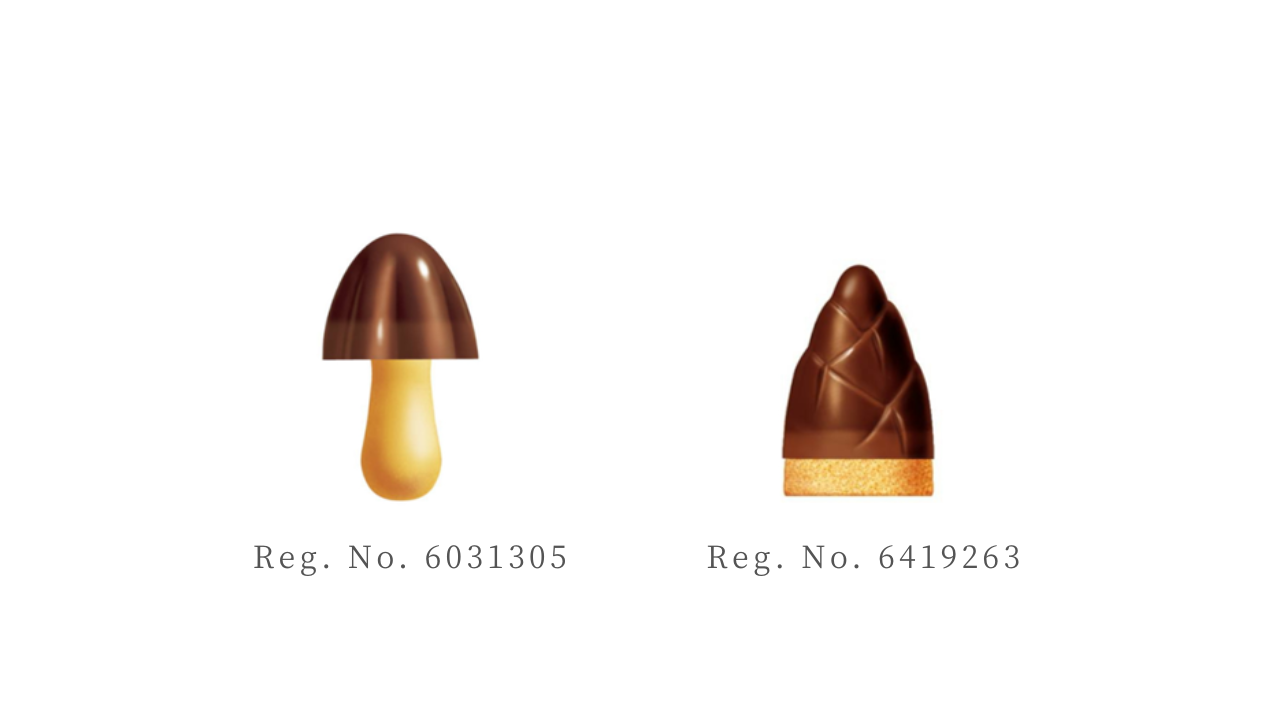
In a similar case, Meiji Co., Ltd.’s “Kinoko no Yama” (Registration No. 6031305) and “Takenoko no Sato” (Registration No. 6419263; designated goods: chocolate confectionery) were also rejected due to a lack of distinctiveness during examination. However, they were registered on the basis of acquired distinctiveness:
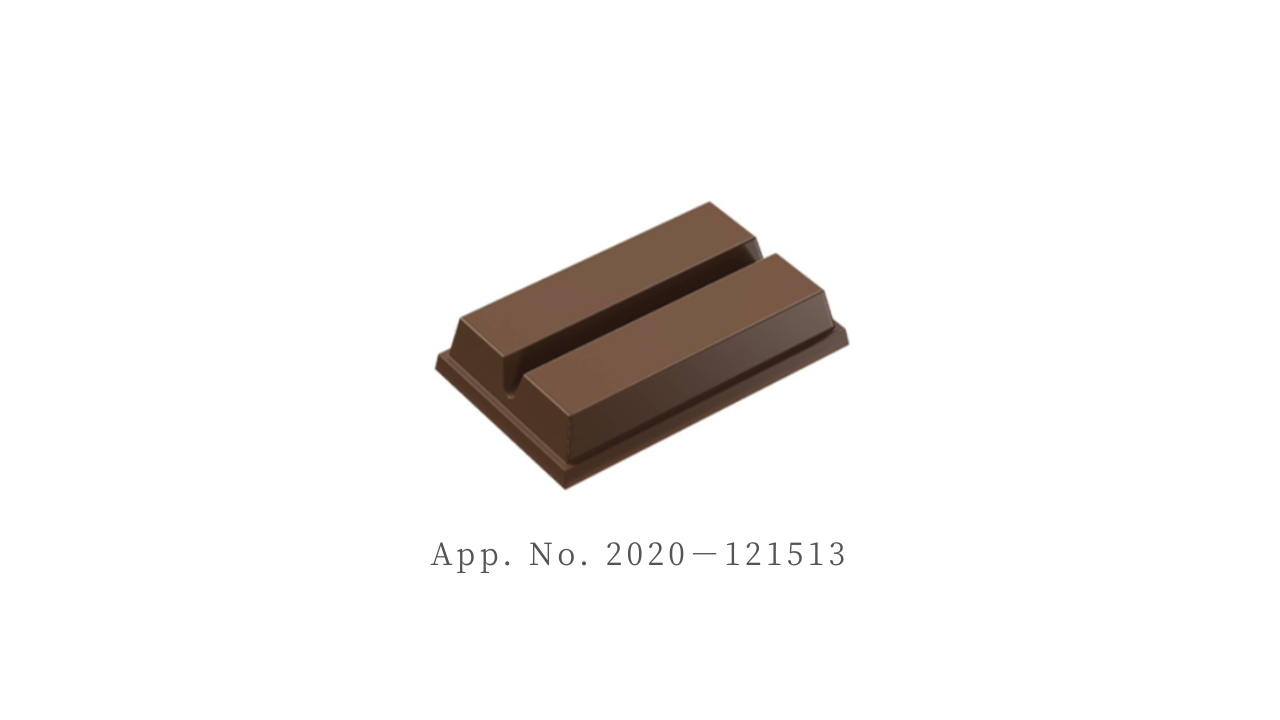
Meanwhile, Nestlé has applied to register the shape of the “KitKat” as a three-dimensional trademark (Application No. 2020-121513). However, this application was not approved during the examination stage and is currently under review in the appeal proceedings (the higher-level review stage) against the refusal decision:
In this case, the survey of general Japanese consumers whose ages fell in a broad range (16–79 years) revealed that 91.6% of respondents associated the trademark with Pocky immediately upon seeing it. This finding demonstrates a strong recognition of Pocky’s 3D shape and provides clear evidence that it functions effectively as a trademark. I believe that the consistent depiction of Pocky’s 3D shape on product packaging since its initial launch also greatly contributed to this victory.
Member
PROFILE

SHARE