
ブログ
[Space Business and Japanese Space Law ①] The Structure and Overall Framework of Space Law That Should Be Understood Before Entering the Japanese Market
2026.07.15
SHARE


Introduction
In recent years, a wide variety of space businesses have emerged in Japan, and the sector is thriving. Entry into such space businesses requires compliance with numerous Japanese relevant laws and guidelines, including the Space Activities Act, the Space Resources Act, the Satellite Remote Sensing Act, and the Radio Act. Accordingly, this article, written by attorneys at TMI Associates who have been involved in a wide range of space-related matters, provides an overview of the structure and overall framework of space law that should be understood before entering the market.
The Structure and Overall Framework of Space Law
The overall picture of space law applicable to space business can be illustrated as follows:
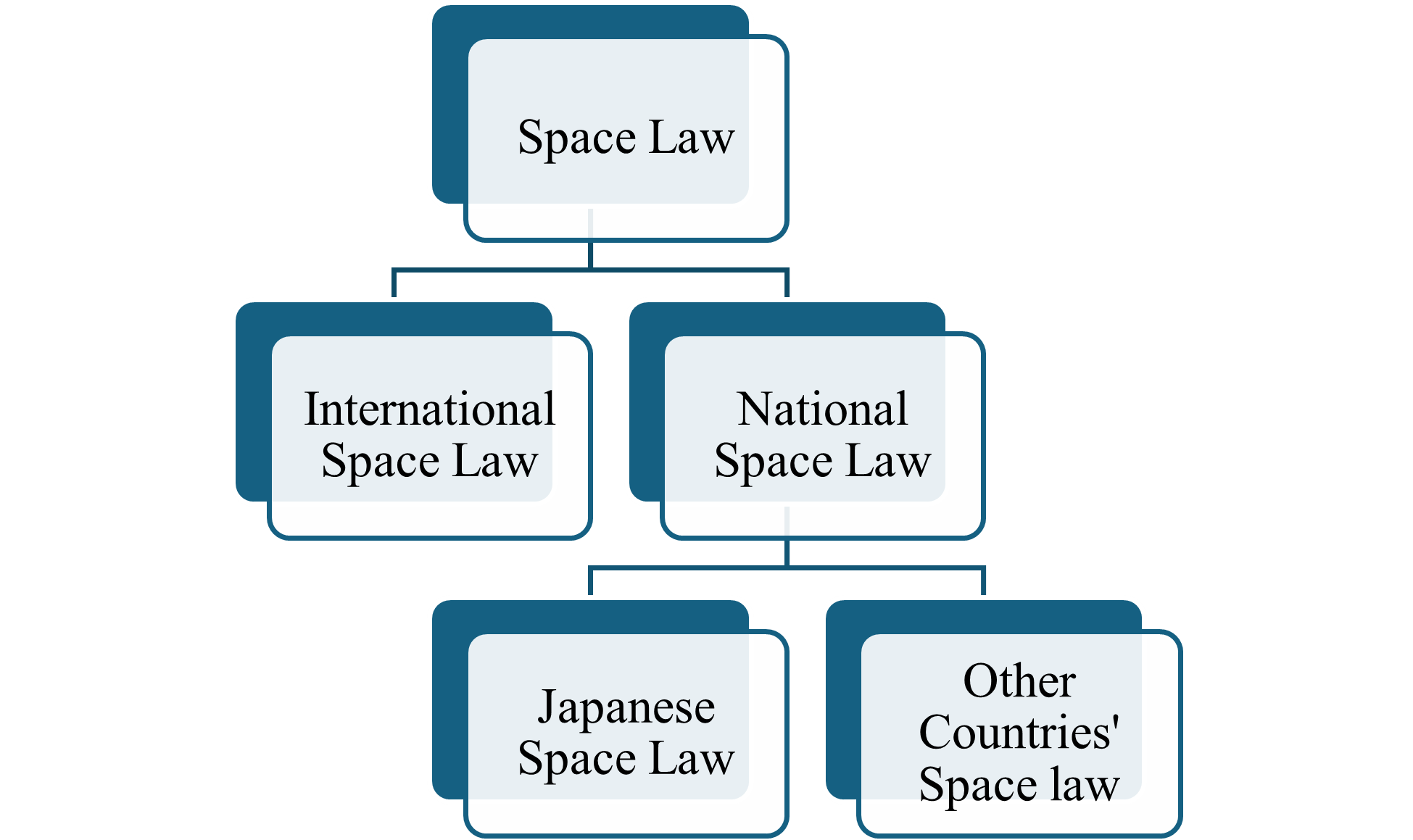
As shown, space law is classified into international space law, which is a field of international law, and domestic space law, which is a field of each country's domestic law. Domestic space law is further classified into Japanese space law and the other countries’ space law.
Japanese Space Law
The first matters that must be grasped when conducting space business in Japan are the Japanese space law as follows:
- Act on Launching of Spacecraft, etc. and Control of Satellites, etc. (the Space Activities Act): This Act provides for licenses relating to the launch of spacecraft, etc. from within Japan and licenses relating to the control of satellites, among other matters.
- Act on Promotion of Business Activities Related to Exploration and Development of Space Resources (the Space Resources Act): This Act provides for licenses relating to the exploration and development of space resources, the acquisition of ownership of space resources, and other matters.
- Act on Ensuring Appropriate Handling of Satellite Remote Sensing Data (the Satellite Remote Sensing Act): This Act provides for permits relating to satellite remote sensing, among other matters.
In addition, conducting space business may involve a variety of other Japanese laws, including the Civil Aeronautics Act, the High Pressure Gas Safety Act, the Explosives Control Act, the Fire Service Act, the Act on the Control of Poisonous and Deleterious Substances, the Radio Act, and the Foreign Exchange and Foreign Trade Act. It is therefore necessary to examine which laws are relevant depending on the actual content of the business in question.
International Space Law
In the examination of licenses relating to the launch of spacecraft, etc. and permits relating to the control of satellites under the Space Activities Act, review is conducted with reference to the following treaties, among the body of international space law:
- Treaty on Principles Governing the Activities of States in the Exploration and Use of Outer Space, including the Moon and Other Celestial Bodies (the Outer Space Treaty): This is a treaty of significant importance that sets out various principles concerning the exploration and use of outer space.
- Agreement on the Rescue of Astronauts, the Return of Astronauts and the Return of Objects Launched into Outer Space (the Rescue Agreement): This treaty provides for the rescue and return of the crew of spacecraft, the return of objects launched into outer space, and other matters.
- Convention on International Liability for Damage Caused by Space Objects (the Liability Convention): This treaty sets out liability and other matters relating to damage caused by space objects such as satellites.
- Convention on Registration of Objects Launched into Outer Space (the Registration Convention): This treaty provides for the registration of space objects such as satellites, among other matters.
* Japan is not a signatory of the Agreement Governing the Activities of States on the Moon and Other Celestial Bodies (the Moon Agreement)
Accordingly, conducting space business in Japan requires an understanding not only of the Japanese space law, but also of international space law.
In addition, various United Nations resolutions and guidelines have been developed concerning the interpretation of these treaties, and understanding the content of such resolutions and guidelines can be important in certain cases. For example, the government guideline relevant to the Space Activities Act, the Guidelines Concerning Licenses for the Control of Satellites require that “measures be taken in accordance with the Planetary Protection Policy established by COSPAR” (p. 13 of the Guidelines).
Conclusion
This article has provided an overview of the structure and overall framework of space law that should be understood before entering the Japanese market. In actually conducting space business, it is necessary to examine the applicable laws and regulations for each specific matter, while keeping this structure and overall framework in mind.
The second installment of this series will address Japanese space law as it relates to space business, and the third installment will address international space law as it relates to space business. The latest information on this series and related topics is available on this page. We hope you will take a look.
Thank you very much for your kind attention.
Member
PROFILE

SHARE